
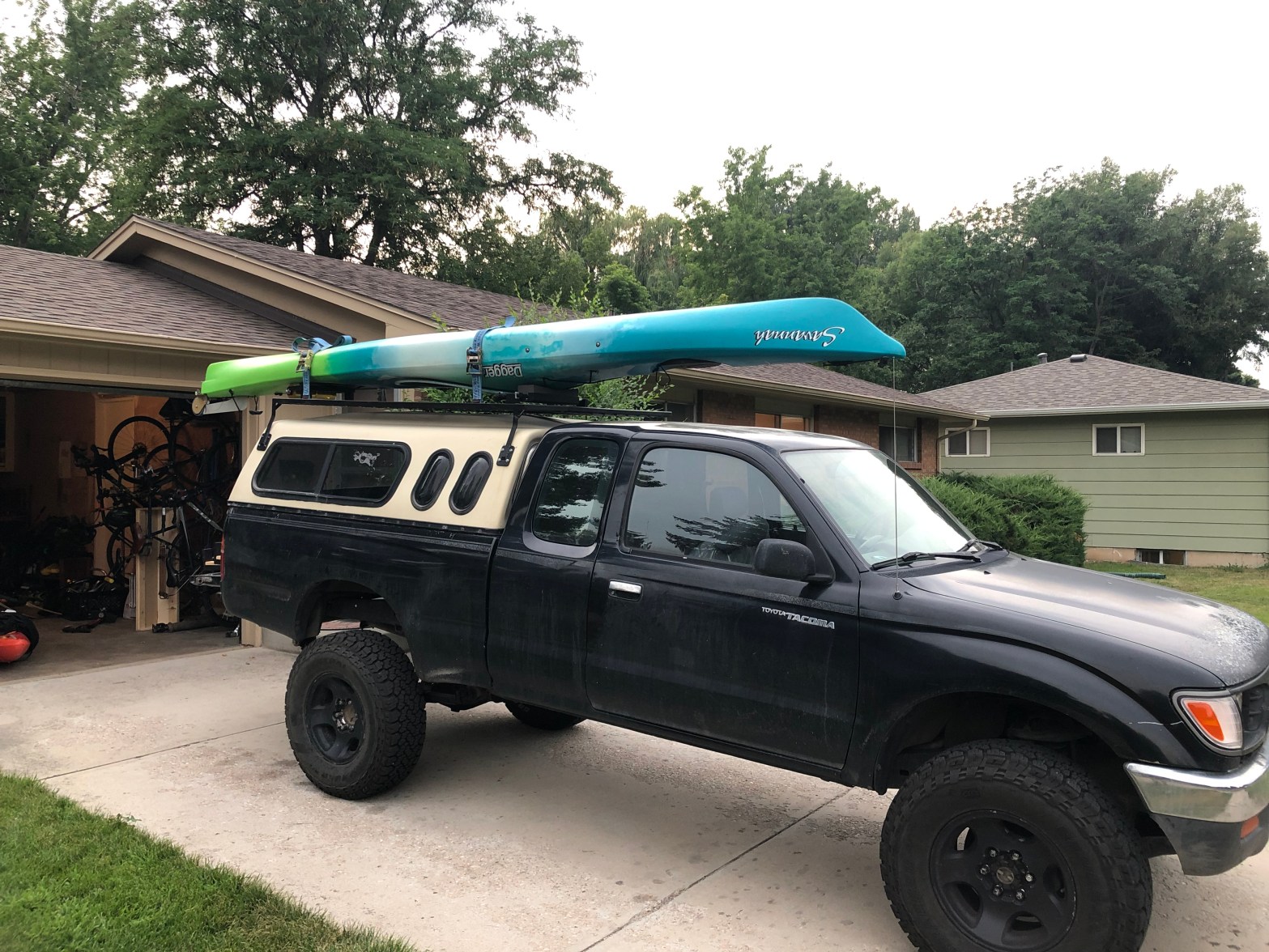
So this started as one of those projects that was simple and quick. It went downhill from there very quickly, and by that I mean it got complex because I kept adding features. It’s a…familiar feeling for anyone who has built anything. But unlike a lot of other projects, all the extra time and effort wound up paying off in a big way in the end. Literally saved my life. But more on that later…
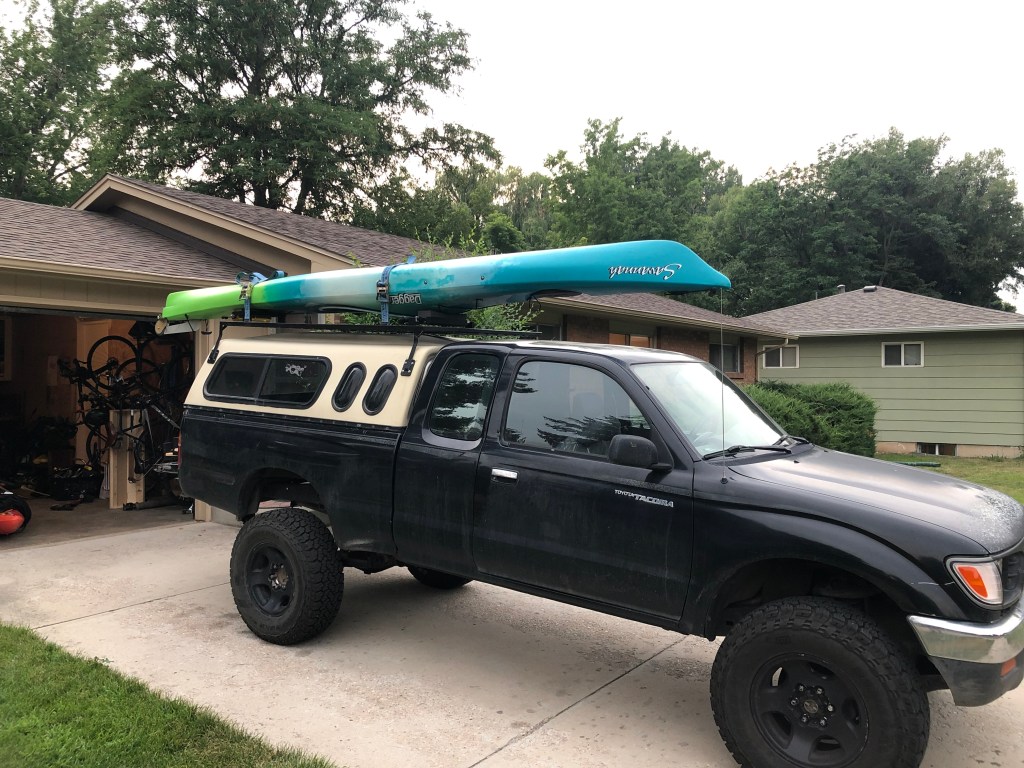
The original concept was a couple load bars to bolt onto the topper of my 1996 Tacoma so that I could strap my kayak to it. At some point, though, I thought it would be a good idea to be able to carry my skis too…and maybe full sheets of plywood…but why stop there? It might be nice to be able to stand on it too… What finally evolved was a 6’6″ x 4′ steel-framed platform with about 24′ of E-Track integrated into it for attaching racks, holders and ratchet straps. In between the E-Track channels, I decked it in expanded steel which formed a (relatively) light platform big enough for sleeping on. I also welded up a kayak cradle attachment, some ski racks (free from a friend!), and some load bars for holding plywood and other sheet goods.

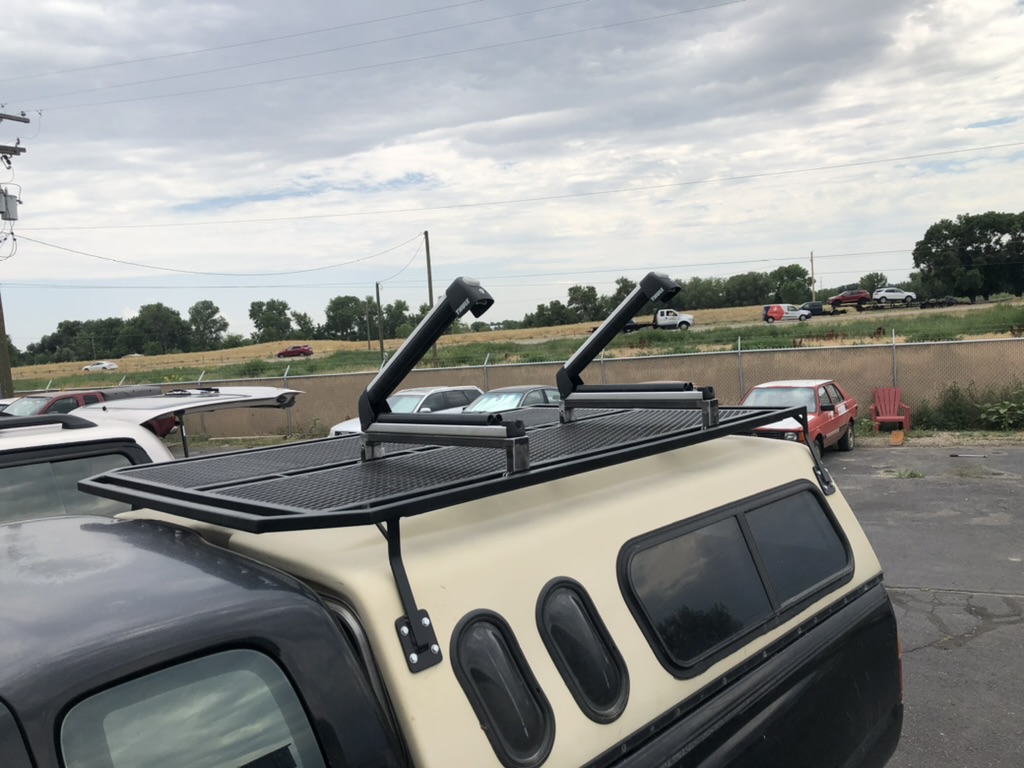
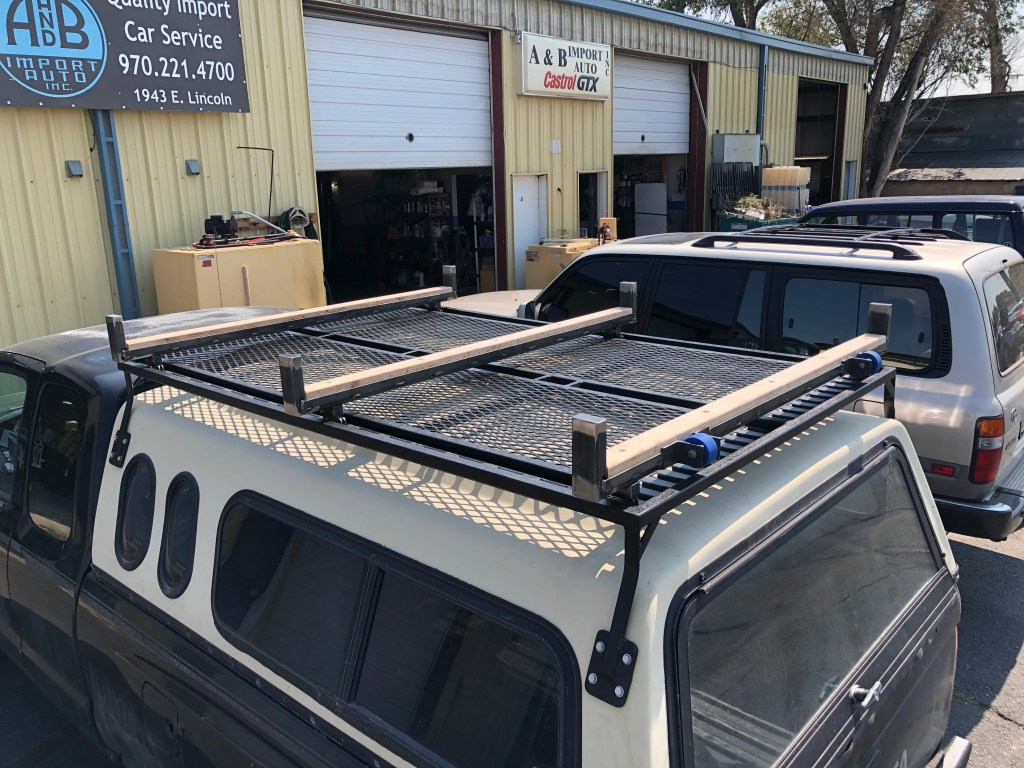
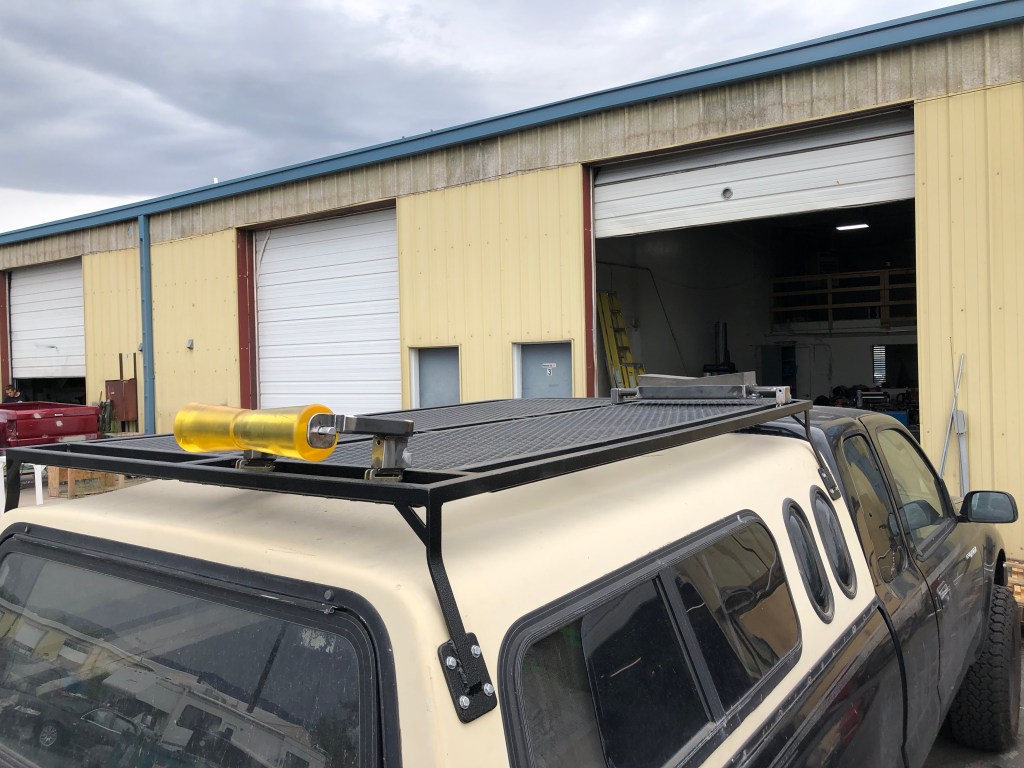
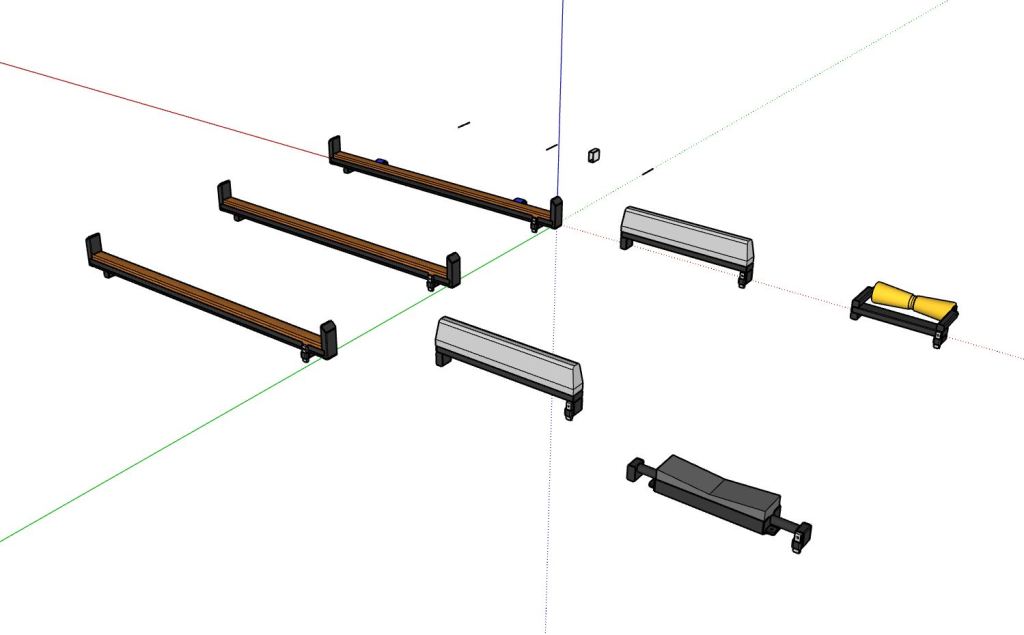
that was starting to look a little like a platform frame. So then the perimeter got lengthened and widened with some angles on the front corners to make it look cooler and maybe add ditch lights at some point in the future. Then I figured I might as well deck it so I could set stuff ON it instead of IN it. But then that meant I would need to strap things down, and if there’s one thing that is sure to make me irrationally irritated, it’s the ratchet strap dance. Where you hook one end, walk over to the other side of the vehicle, adjust the strap, hook the other end, adjust it some more, and start cinching it down. But by that point, the far side as come unhooked, so you walk back to that side, re-attach the strap, etc, etc, etc. Which is where the E-Tracks comes in since I already had some E-Track straps from an earlier project. The E-Tracks channels then opened the possibility of adding custom “tooling” to the rack to hold skis, plywood, etc. However, all that steel that wound up incorporated into the platform weighed more than I had anticipated, and I was fairly certain that the fiberglass topper it was going to be mounted on would not hold up to the weight of the platform, much less the additional weight of anything on it. This then led to building support legs for the inside of the topper that then bolted directly to the bed rail, thereby supporting the entire load off the bed rail rather than the flimsy fiberglass topper.
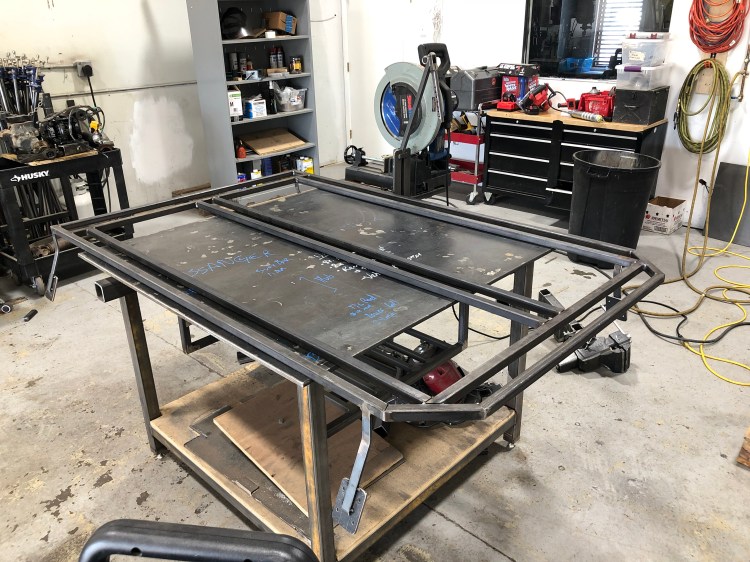
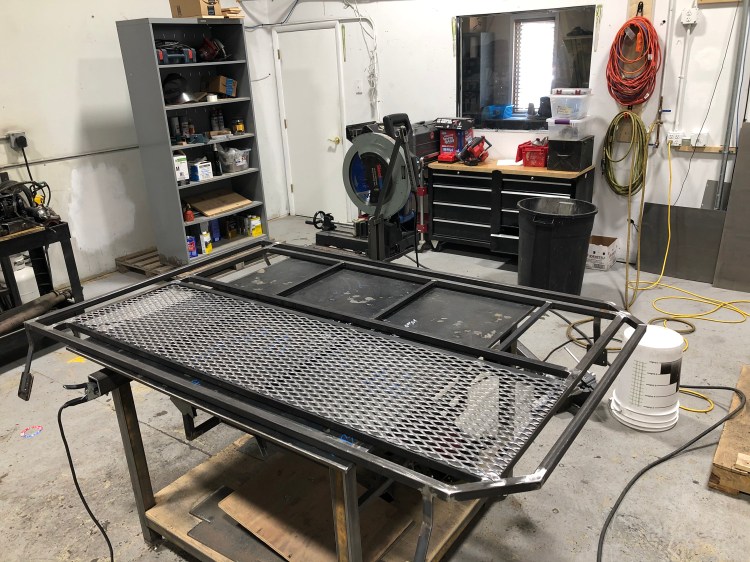
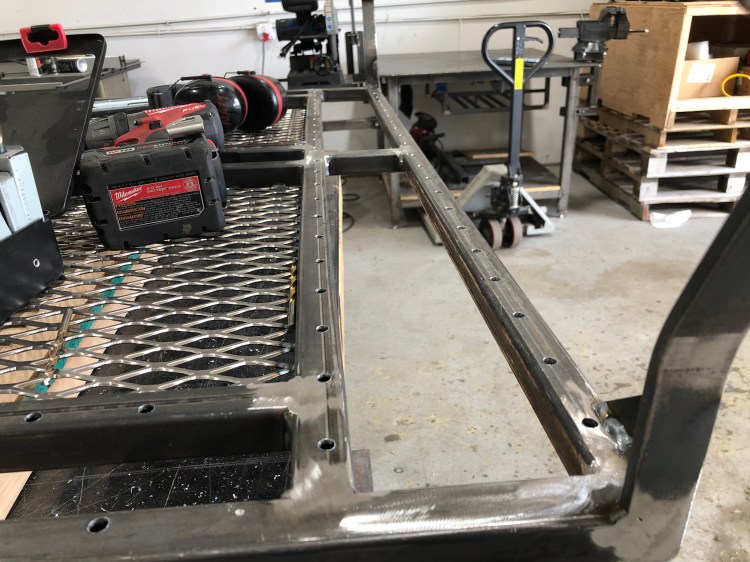
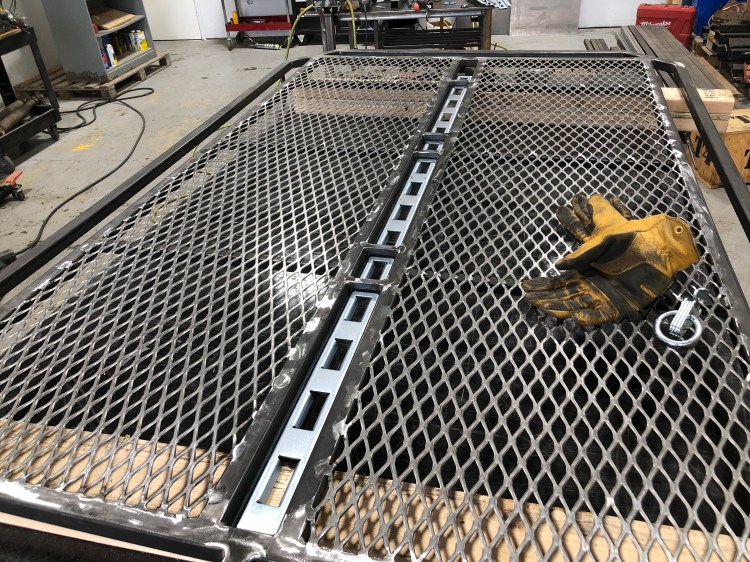
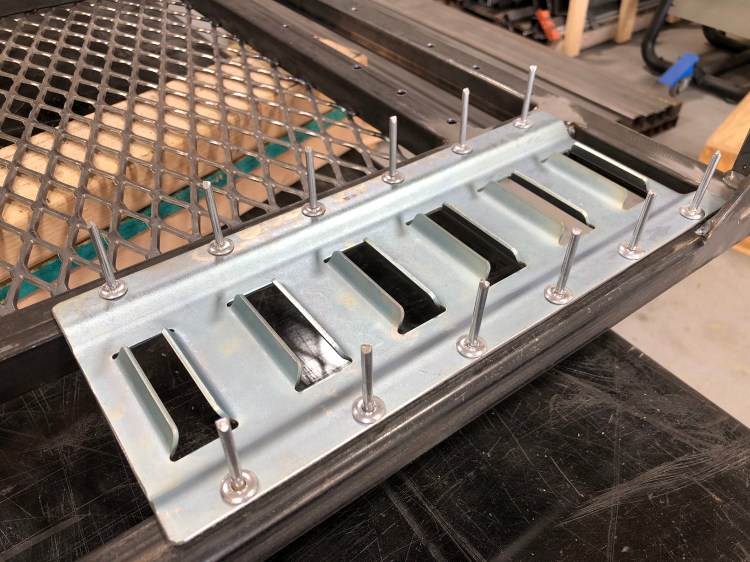
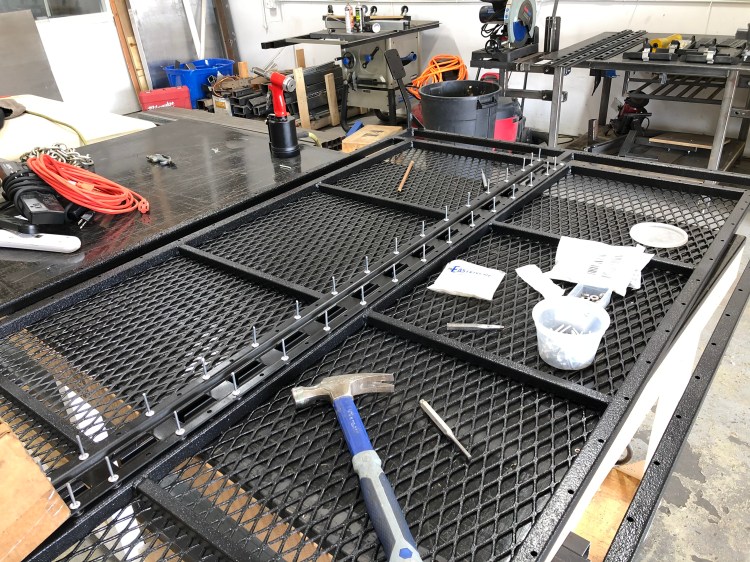
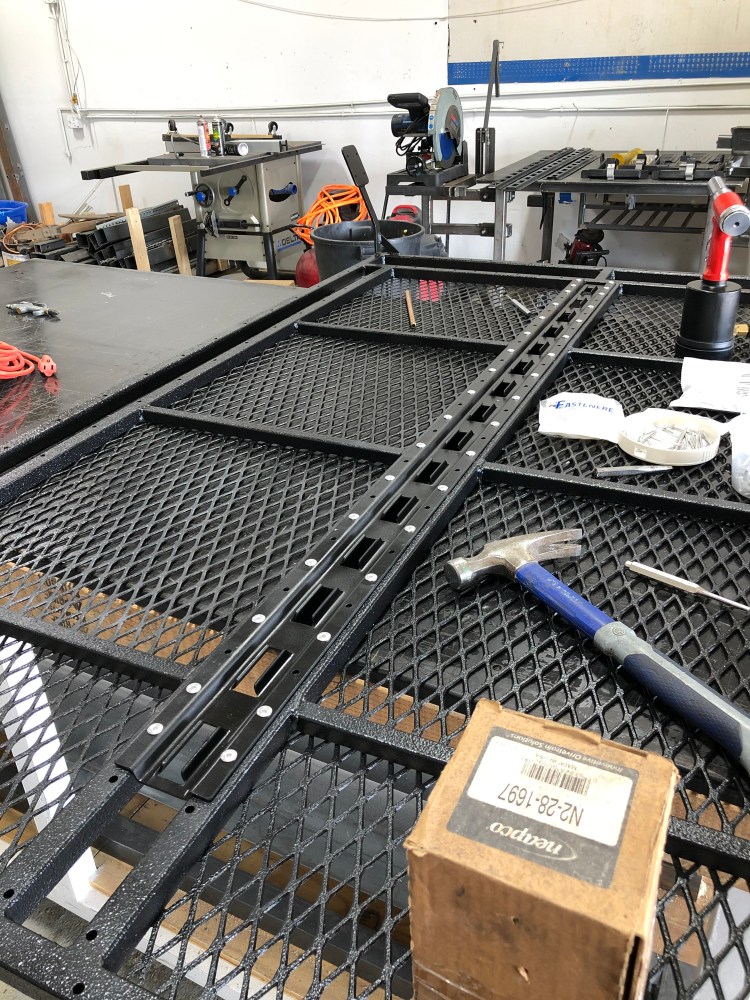
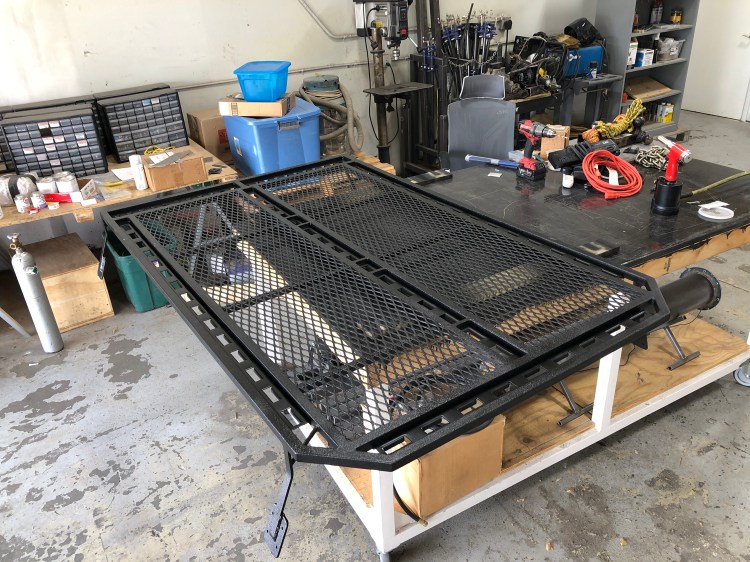
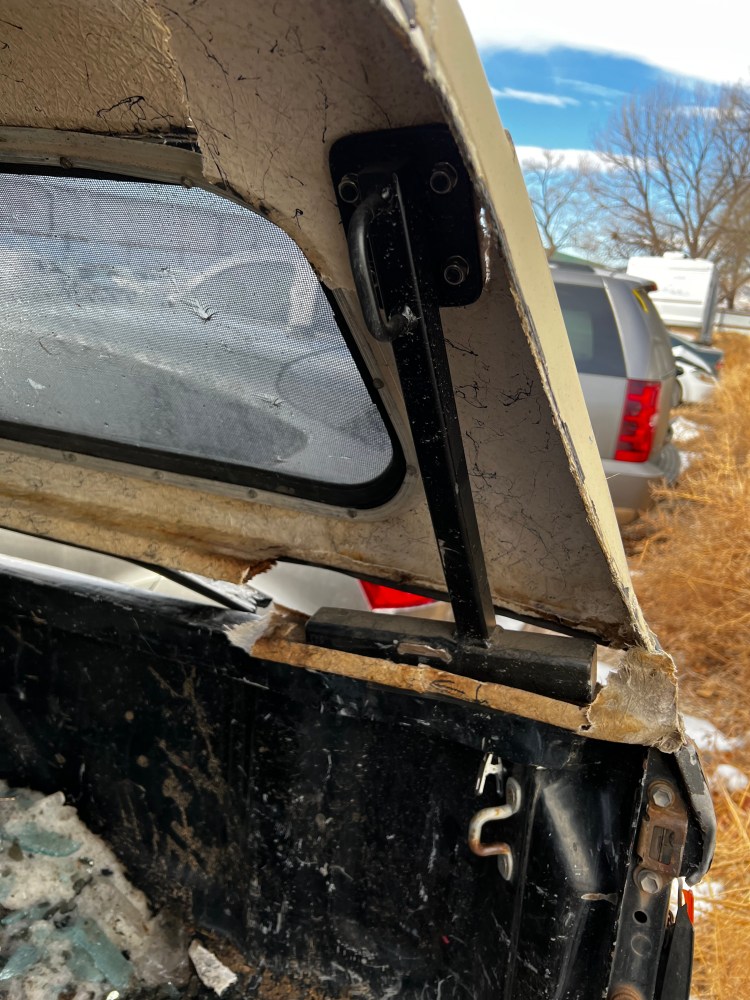
By the time I had finished ad hocking it together, I wound up with a heavily reinforced full perimeter of 1″ square x 16 gauge square tube steel over the entire bed, supported by 1″ square x 1/8″ square tube legs inside the topper, which then bolted to the bed rail via 2x 3/8″ bolts that had 1/4″ load spreader plates on both sides of the rail.
After paint and final install, it worked GREAT. The E-Track channels gave me tons of attachment options and the ratchet straps stayed put perfectly. The various racks were also great and were a very fast changeover between rack sets. And it was more than solid enough to stand on without any worries (apart from falling off). One might even say it was slightly overbuilt, or as I like to call it, North Dakota engineered.
In the end though, that North Dakota engineering saved my life.
I went skiing one morning up in my favorite backcountry spot, and on the way back down, I hit a batch of black ice and lost control of the vehicle. I was on a mountain road next to a river. After rolling several times down the embankment, I wound up on my wheels on top of the ice on the river. I walked away with a couple scratches and nothing more. Looking at the truck afterwards, the roof of the driver’s compartment had taken some abuse, but the back of the truck was good and smashed. I can’t say for sure, but I’m pretty sure that overbuilt roof rack with its support columns acted like a low-key roll cage and saved my neck from getting snapped when the truck rolled down the embankment.
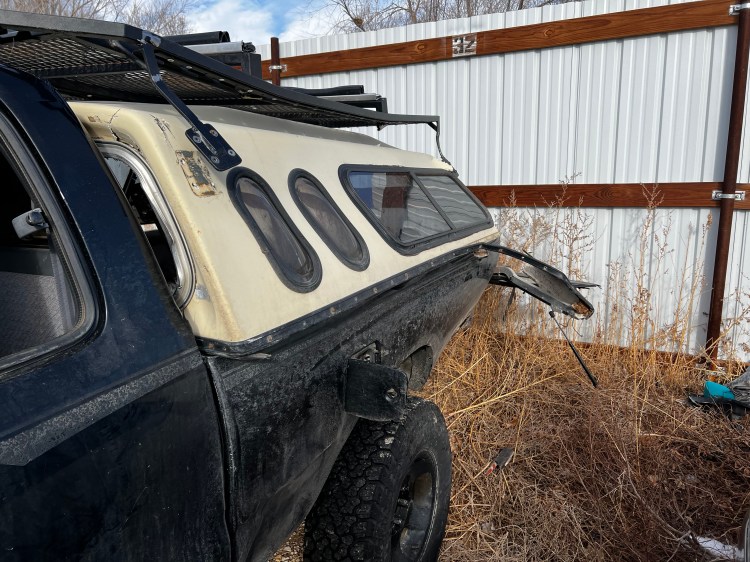
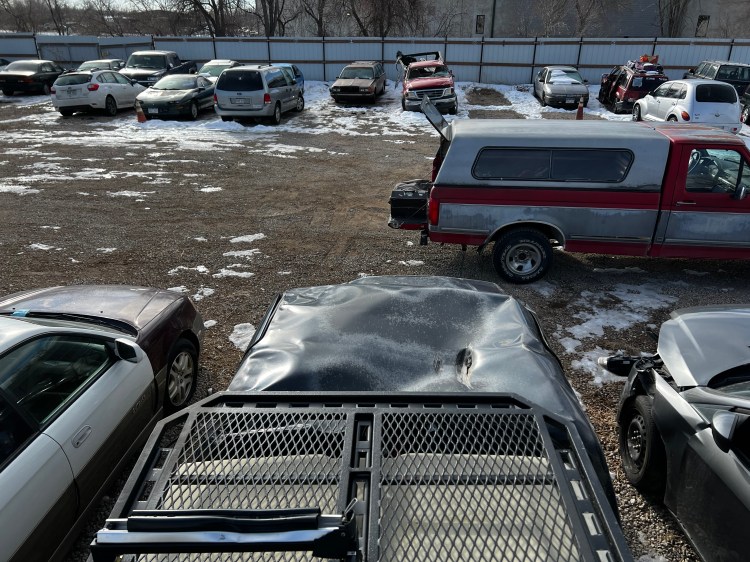
Moral of the story: always overbuild.
 Matthew J Erickson